
Cart
Your shopping cart is empty! How to prepare a dog kennel for winter
How do you prepare a dog kennel for winter?
A kennel does not produce heat. It holds on to the heat the dog gives off. So everything you do for winter comes down to one thing: not letting that heat escape.
Four steps, and the order matters: lift the kennel off the ground, stop the wind, check the size, and only then put the bedding in. At the end there is a simple way to check whether it worked.
1. Lift the kennel off the ground
The kennel should stand above the ground, not on it. Cold, damp ground pulls heat out around the clock, and the bedding stays damp from below however good the material is. Advice published by LSM suggests pallets for this. A few centimetres of air under the floor changes everything.
2. Stop the wind
Wind moving through a kennel carries the warm air away faster than any bedding can hold it.
Both the LSM and Apollo articles mention double walls with insulation inside and a covered entrance: plastic strips or a curtain that covers the opening without flapping in the wind. A threshold 3 to 10 cm high, depending on the size of the dog, keeps the bedding in and blocks the lowest, coldest layer of air at floor level.
3. Check the size
The kennel should be at least 30 cm larger than the dog in length, height and width, so it can stand up, turn around and stretch out comfortably.
But bigger is not better. In winter a kennel that is too big is as bad as one that is too small. The air is heated by the dog's body, and the more air there is, the more heat it takes. A roomy kennel with one medium-sized dog in it never really warms up in winter.
4. Bedding goes in last
The bedding layer is the final step, once the kennel is ready, and deep enough for the dog to sink in and shape a nest. The dog will pack the material to its own shape, so how loose the layer is matters more than how thick it is.
Which material works and which does not, we have compared separately: what to put in a dog kennel in winter. The short version: wood wool yes, straw with reservations, a blanket no.
How to check the kennel actually holds heat
The simplest test costs nothing: put your hand inside the kennel just after the dog has come out. If it is noticeably warmer in there than in the yard, the kennel is doing its job.
If it is not, the heat is escaping somewhere, and in practice it is almost always one of three things: a cold floor, a draught through the entrance, or too much space inside. Those are the same three steps, in reverse.
The second check is the bedding itself. Push your hand into the bottom layer, where the dog lies. If the bottom is damp, the layer has stopped insulating and needs replacing, even if the surface looks dry.
Frequently asked questions
Does a dog kennel need insulating in winter?
Insulation helps, but on its own it heats nothing. The kennel holds the heat the dog gives off, so insulation only works together with a dry, raised base, a covered entrance and the right size.
How big should a dog kennel be?
At least 30 cm larger than the dog in length, height and width. More is not better: the greater the volume, the more air the dog has to heat with its own body.
Does a kennel need a threshold?
Yes. A threshold 3 to 10 cm high, depending on the dog, keeps the bedding inside and blocks the lowest, coldest layer of air at floor level.
When should the kennel be got ready for winter?
Before the first frosts, not after them. Damp timber and damp bedding no longer dry out in winter, so it is far easier to do on a dry autumn day than on the first day below zero.
Sources
The kennel preparation advice is summarised from publicly available publications. None of the specialists cited has commented on KOWOOL or on wood wool bedding.
- Jūlija Bogomolova, canine specialist. Siltināta būda ziemā rāda rūpes par suņa veselību, LSM.
- Anna Buša, veterinarian, PetCity. Vai un kādi suņi ir piemēroti dzīvei ārā, Apollo.
Products related to this post


Related Posts
What to put in a dog kennel in winter to keep your dog warm
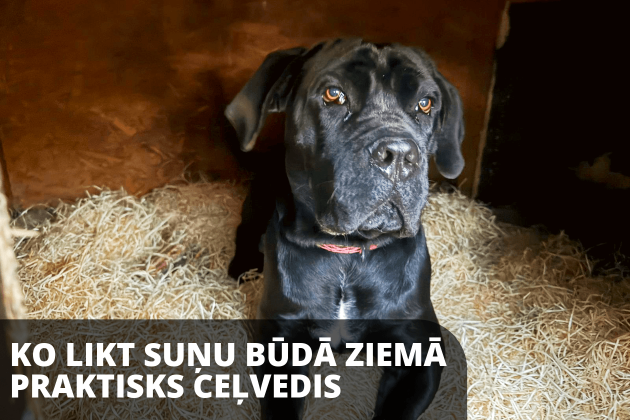
What to put in a dog kennel in winter, and why an old blanket is the worst choice. Straw, hay and wo..
Comments